The Invisible Work of Writing: What Building an Author Life Really Looks Like
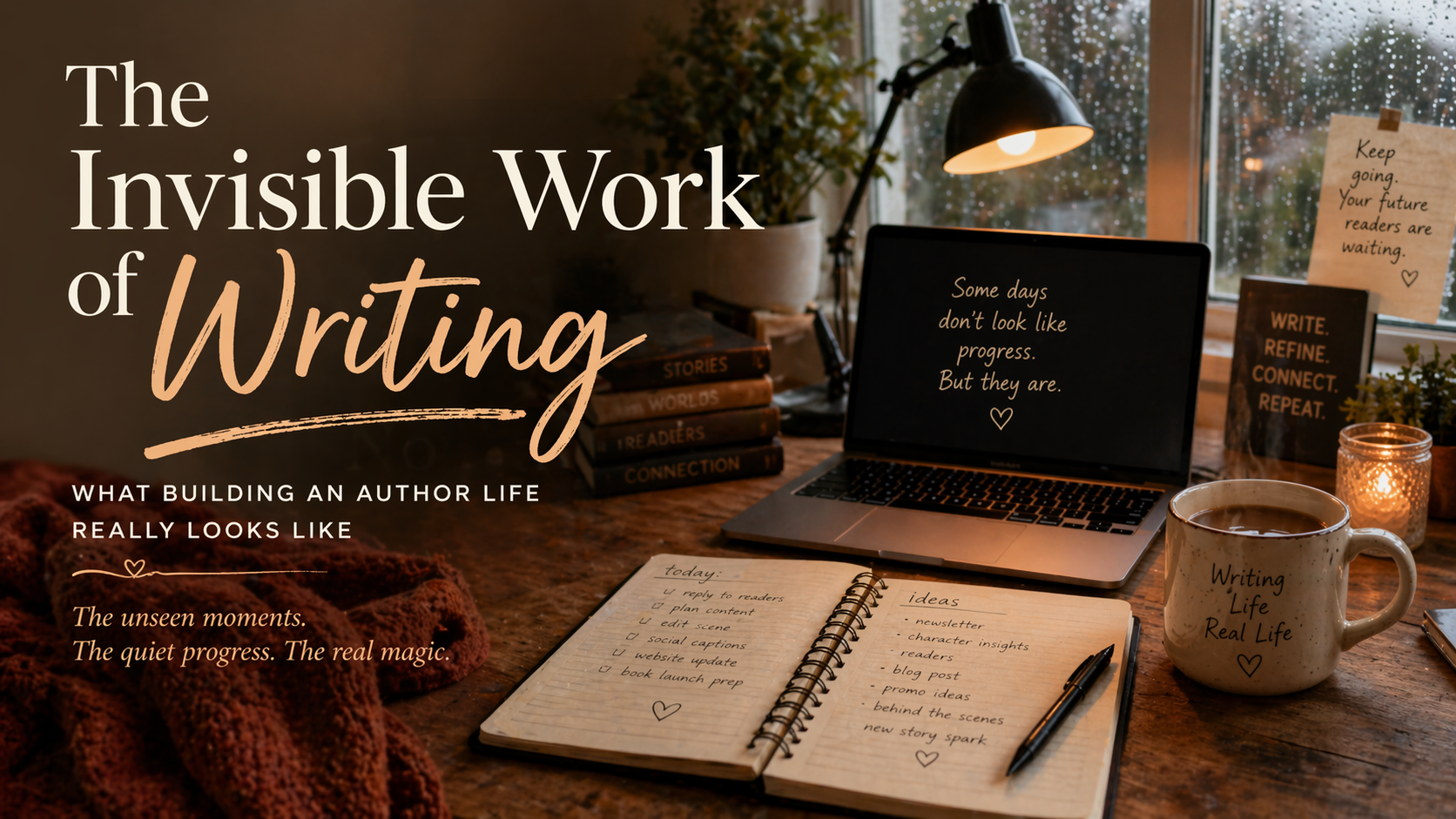
This morning I told myself I would spend an hour or two sorting a few book bits. Nothing dramatic, nothing demanding, just a quiet little task to ease into the day.
It was, in theory, a simple plan.
By lunchtime, I had somehow discussed character marketing, scene adaptation, promotional strategy, audience engagement, visuals, messaging, future content, and whether a fictional man called Justice ought to be allowed to remain alive on screen for another thirty seconds.
So much for the quiet start.
This is the side of the writing life people do not always see.
There is still a common image of writers sitting at a desk in a glorious rush of inspiration, producing page after page while chapters stack themselves neatly by sunset. When that does not happen, many writers quietly assume they are doing something wrong.
If the word count is low, they think they are falling behind. If the day has been spent elsewhere, they think it has not counted.
But building an author life often looks nothing like that.
Sometimes it looks like answering readers with care because connection matters. Sometimes it looks like refining ideas no one else can yet see, or protecting the heart of a story while outside opinions try to pull it in ten different directions.
Sometimes it looks like learning platforms, newsletters, captions, algorithms, graphics, websites, and all the strange practical machinery that appears beside the creative work.
And sometimes it looks like making so many decisions that by late afternoon your mind feels thoroughly wrung out.
That kind of tiredness can be difficult to explain, because creativity is not only about writing words.
It is also about judgement, problem-solving, instinct, adaptation, timing, persistence, and knowing what to leave alone.
From the outside, a day like that may look unproductive. There may be no finished chapter, no dramatic milestone, nothing tidy enough to hold up as evidence.
Yet mentally, it can feel like running a marathon in place.
So if you have spent today “doing bits” and now feel tired, that counts as work.
It counts if no one saw it. It counts if it felt messy. It counts if progress was quiet and difficult to measure.
Very often, the small unseen tasks are the ones moving larger things forward.
Three Things That Help Me Remember That
1. Stop calling it “just admin”
If it supports your books, your readers, your visibility, or the future you are trying to build, then it is not lesser work. It is part of the writing life.
2. Separate creative energy from practical energy
Drafting a chapter and planning promotion may both belong to the same career, but they draw on different parts of you. Feeling tired after one does not mean you have failed at the other.
3. Finish before empty
There is wisdom in stopping while something still remains in the tank. Progress made gently is often worth more than exhaustion worn proudly.
Sometimes Invisible Work Becomes Something Lovely
One of the unexpected outcomes of this particular day was Justice’s Unofficial Biscuit Guide to the Apocalypse.
What began as a passing conversation about characters, humour, and how readers connect with a story somehow turned into a full Queen’s Road extra centred around Justice explaining what type of person everyone would be… as biscuits.
It was ridiculous, oddly insightful, and far more fun to create than it had any right to be.
That, too, is part of the writing life people do not always see.
Not every productive day produces chapters. Sometimes it produces ideas, reader extras, unexpected joy, or something small that deepens the world you are building.
This little guide is now going out as a free gift for newsletter readers at the end of the month, and I’m genuinely excited to share it.
Because sometimes the work you nearly dismissed as “just bits” becomes the thing readers enjoy most.
If you’d like to explore my books, stories, and reader extras, you can find everything here:
Quiet Progress Still Counts
Today reminded me that not every productive day looks productive.
Sometimes progress is invisible. Sometimes momentum arrives quietly. Sometimes a tired writer at a desk has moved an entire career forward, and no one would know by looking.
And sometimes, if you are very lucky, it also ends in biscuits.