Zombie Apocalypse Dystopian Fiction: Why Human Stories Matter More Than Survival
What elements of a zombie apocalypse story truly resonate with you?
On the surface, it’s chaos. Cities are empty, systems fail, and the structures people once relied on simply stop working. Everything familiar disappears faster than anyone expects.
But that isn’t really what lingers.
What stays with us tends to be something quieter and far more human—people, placed under pressure, revealing who they are when everything else is stripped away.
Where Zombie Stories Really Began
Long before film and television, zombies existed in Haitian folklore. They weren’t portrayed as infected monsters but as people who had lost control of themselves—bodies directed by something external.
Over time, that idea evolved. Zombies became symbols of disease, fear, and the loss of autonomy. Something more immediate, more physical, and more visibly threatening.
But as the genre developed, they also became something else: a narrative tool.
A way of asking a specific and unsettling question—what happens when the world stops working?
When Horror Turned Into Dystopia
As writers explored that question, the focus began to shift.
The outbreak itself became less important than what followed it. Instead of being the central event, it became the starting point for something deeper.
Because once systems collapse, more fundamental questions emerge. Who are we without structure? What do we hold onto when everything familiar is gone? What actually matters when survival is no longer theoretical but immediate?
This is where zombie fiction moves beyond horror and into dystopia.
And more importantly, it’s where it becomes recognisable. Because at that stage, the zombies themselves are no longer the focus.
People are.
The Familiar Shape of a Zombie Story
Most zombie narratives follow a structure we instinctively recognise. Society collapses quickly, resources become scarce, and infection spreads beyond control. Inevitably, other survivors begin to pose as much of a threat as the undead.
That structure works for a reason—it creates tension, urgency, and high stakes.
But it can also begin to feel predictable. And often, it narrows the story to a single driving question: how do we survive?
Where My Writing Takes a Different Turn
That question has never felt like the most interesting one to me.
What draws me in is not the constant motion or spectacle, but what remains after the initial collapse—particularly on an emotional level.
Instead of focusing on movement, my stories tend to stay in one place. A single street, a building, a contained group of people trying to maintain some form of stability.
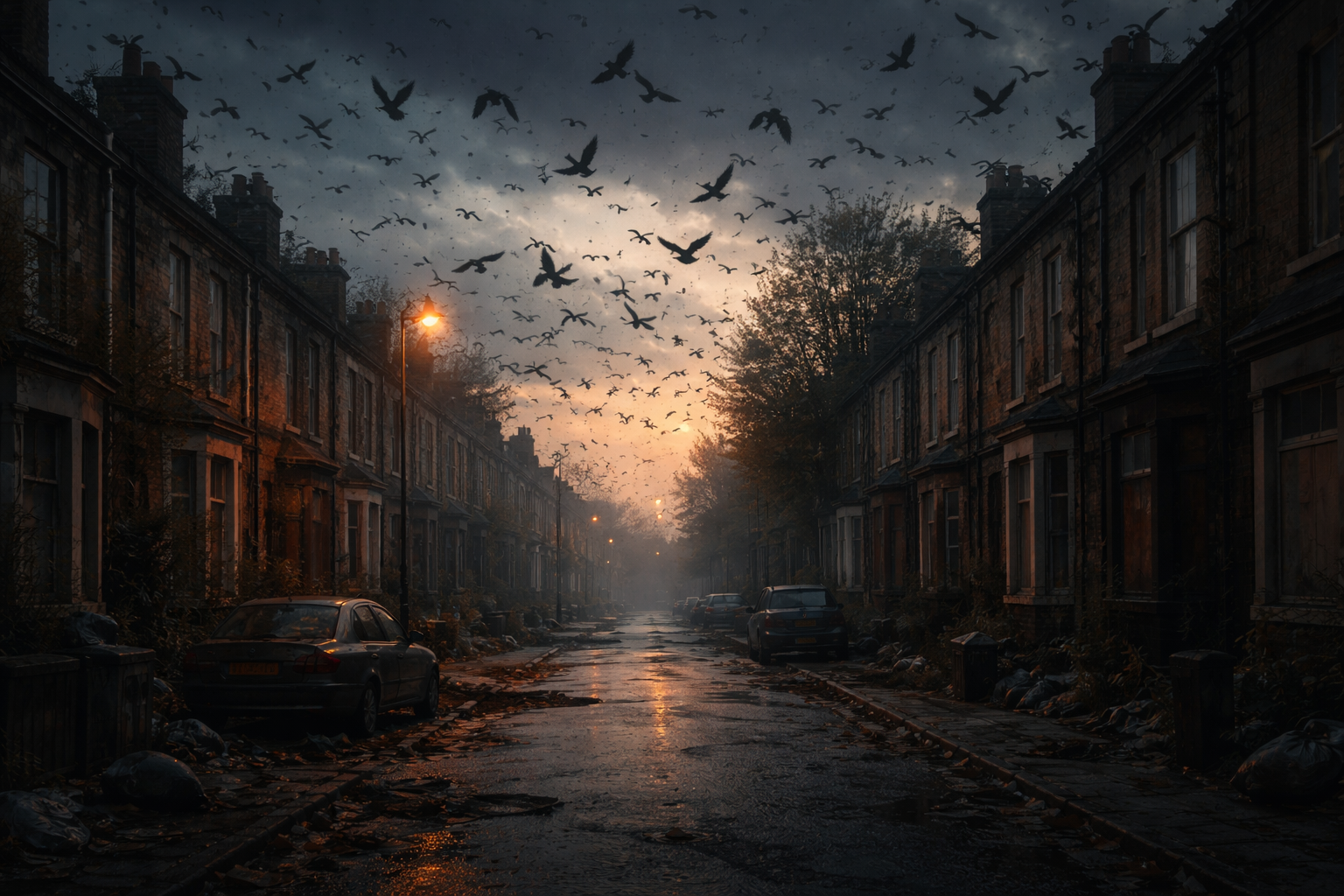
In my own work, this takes shape in Queen’s Road—a single British street where the world has already ended, but life, in small and stubborn ways, continues.
And that stillness changes the dynamic completely.
The question shifts from how do we survive to something more complex: how do we continue to live alongside each other while doing it?
Letting People Drive the Story
In many zombie stories, the threat dictates the pace and direction of the narrative.
In mine, the driving force is human behaviour. Relationships, tensions, and the small, cumulative decisions that either build trust or quietly erode it over time.
The zombies still exist. They still matter.
But they are not the centre of every moment.
No Heroes—Just People
There are no perfect leaders or action-driven heroes in these stories.
Instead, there are ordinary people—neighbors, families, individuals—who are forced to navigate a reality they never expected to face.
They hesitate. They make mistakes. They adapt unevenly.
And that imperfection is what makes them believable.
The Power of Quiet Tension
Not every moment of tension needs to be loud or dramatic.
Often, the most significant moments are the smallest ones—sharing limited food, deciding whether someone can be trusted, attempting to maintain routines in a world where those routines no longer make sense.
That kind of tension doesn’t resolve quickly. It lingers, shaping everything that follows.
Humour Still Exists
Even in collapse, people don’t stop being human.
They still joke, argue over trivial things, and reach for small comforts like tea or conversation.
That contrast isn’t a distraction from the darkness—it’s part of how people endure it.
Why This Approach Matters
Many zombie stories ask the same central question: how do we survive the end of the world?
The question I’m more interested in is slightly different: how do we remain human within it?
That shift changes the tone of the story entirely. It makes the stakes more personal, the decisions more complex, and the characters more recognisable.
Why These Stories Feel So Real
Zombies themselves may not be real, but the worlds built around them often feel uncomfortably plausible.
They reflect real fears—loss of control, system failure, and uncertainty about who can be trusted.
But they also reveal something quieter and perhaps more important.
Even when everything falls apart, people still try. Not always successfully, and not always in ways they’re proud of—but they try.
If You’re Writing Zombie Dystopia
If you’re working within this genre, it’s worth asking what your story is really centred on.
Is it the threat? The world itself? Or the people navigating it?
The most effective stories tend to balance all three—but the ones that stay with readers are almost always grounded in human experience first.
In the End
Zombie dystopian fiction removes certainty. It strips away systems, safety nets, and predictability.
What remains is simple, but not easy—people making choices in situations that offer no clear answers.
And the most compelling stories aren’t really about the zombies.
They’re about who we become, what we choose to protect, and what we refuse to lose.
That is the space Queen’s Road sits within.
Queen's Road is not situated at the onset of the collapse, but rather in the aftermath.
In the routines, people rebuild.
This is evident in the relationships that endure—or break—under the strain.
The quiet, persistent effort is what keeps something human alive.
It’s not about how the world ends. It’s about what people do next.
If that’s the kind of story that stays with you,
You might find yourself at home there.
What kind of zombie story stays with you most—fast-paced survival, or something quieter and more human?
👉 Step onto Queen’s Road here: